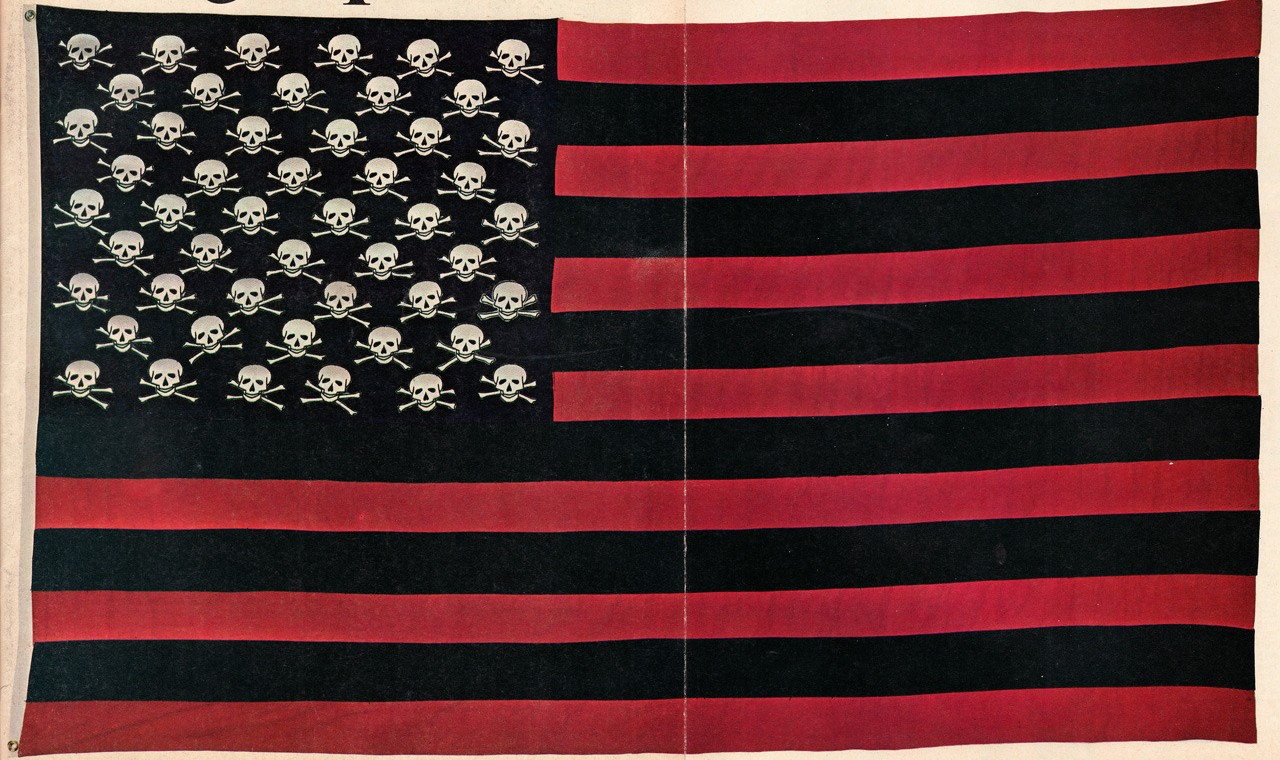
Whatever noises the U.S. might have made in the 1920s about the Philippines gaining self-rule, or even independence, was utterly disingenuous, as the United States sought to further the economic exploitation of the country while reinforcing it militarily as the key imperial outpost, and counter to Japan, in Asia. Karl Reeve investigates the policies and policy makers.
‘The New Imperialist Offensive Against the Philippines’ by Karl Reeve from The Communist. Vol. 8 No. 4. April, 1929.
THE CHOICE of Henry L. Stimson as Secretary of State in the Hoover cabinet is one of the steps in the policy of the United States Government to increase the intensity of the exploitation of the semi-colonies in Latin-America, of the Philippine Islands and the other colonies of the United States. After a trip to Nicaragua as the representative of the Coolidge administration, during which he bought off the leaders of the Liberal Party and planned the further conquest of Nicaragua by the marines, Stimson was rewarded with the job of governor-general of the Philippines.
As governor-general of the Philippines, Stimson carried further the work begun by his predecessor, General Wood, of consolidating the control of the resources of the Philippines more directly in the hands of U.S. imperialism. In carrying out this task, a double line of strategy was followed. On the one hand, Congress passed laws, amending the governing of the Islands, allowing the more free entry of American capital into the Philippines, amending the corporation laws of the Islands; and giving to the Governor General a large sum of money—$125,000—to make his dictatorship entirely free of the decisions of the Philippine legislature. On the other, Quezon and the other leaders of the Nationalists and Democratist parties, who had long cooperated with American imperialism were induced to agree heartily to all these changes. Stimson did his work so well that before his promotion, the native bourgeoisie and their political spokesmen, Quezon and others, instead of paying lip-service to requests for independence, spent their time in openly extolling Stimson and American imperialism. The alliance between the Philippine landlords and the industrial bourgeoisie with American imperialism was completed under Stimson and the class issues were made clear to the toilers of the Philippines, and their organizations against the native bourgeoisie allied with U.S. imperialism.
The Open Letter of the Communist International to the Communist Party of the United States has correctly pointed out that
“the aggressiveness of the United States in the struggle for markets and the most important sources of raw material throughout the world is growing swiftly. The election of Hoover as president means that American imperialism is resolutely embarking on a course which leads to colonial wars of occupation and to an extremely rapid accentuation of the struggle between the United States and its chief imperialist rival—Great Britain. American imperialism is striving for a monopolist position in world economy and politics and is becoming more and more involved in the universal crisis of capitalism and comes more and more into the orbit of the growing instability of world capitalism.”
And this struggle between the United States and its imperialist rivals is taking place with particular intensity in the Pacific arena. In the struggle, the Philippines occupy a strategic position. It becomes of great importance to study the recent developments in the Philippines and to take action to support the struggle of the militant trade unions and peasant organizations, and to link this struggle more closely to the struggle of the workers of America against American imperialism.
Pablo Manlapit, who is a member of the National Committee of the AAAIL is active in this work. Manlapit, it will be recalled, led the strikes of the Filipino workers in Hawaii in 1924-25 and served two years of a ten years sentence for his strike activity before being released on condition that he do not return to Hawaii. Meetings of the Filipino workers have recently been held in Los Angeles and other western cities. The Philippine Confederation of Peasants at its last convention, elected two delegates to attend the world Anti-Imperialist Conference to be held this summer in Berlin.
The Congresso Obrero de Filipinas and the Confederation of Peasants both maintain contact with the Pan-Pacific Trade Union Secretariat, whose head offices are in Shanghai, and undoubtedly both organizations will be represented at the Congress of the P.P.T.U.S. to be held in August in Vladivostock. The Philippines are entitled to five delegates according to the call for the Congress recently issued in the Pan-Pacific Monthly, official organ of the P.P.T.U.S., now published in San Francisco.
The capture of the Philippine Islands from Spain in 1898, and still more the Filipino-American war of 1898-1901, marked the debut of the United States as a full blown imperialist power. The “paternal” domination over Cuba, the possession of Guam, Porto Rico and the Philippines, all came about in this period. But it was in the taking of the Philippine Islands, not from Spain, but from the Filipinos themselves, in a bloody three years war, which most strikingly demonstrated the new methods and objects of American imperialism.
After the defeat of the Spanish fleet at Manila Bay in 1898 by the United States fleet, it was the Filipino army led by Aguinaldo which, egged on and encouraged by the American generals, defeated the Spanish land forces and hemmed them in at Manila, The Filipinos had long fought for independence. Prior to 1872, there had been thirty-four revolts against Spain. The Filipinos now seized this opportunity to again claim independence. On June 12, 1898, a “revolutionary” government was set up by the Filipinos at Cavite, an alliance between the peasants and the native bourgeoisie, just two months before the American army arrived. This government set as its task “to abolish with a firm hand the vices of the Spanish administration,” and a provisional temporary constitution was formulated. The government declared itself founded on “the right for its only justification, for its sole aid, justice, and for its only means honorable labor.” In three months this government was transformed into a republic with Aguinaldo as president. The Filipino army defeated the Spaniards, and the U.S. government, realizing as Major Bell said, “that Aguinaldo and his leaders will resist any attempt of any government to recognize a colonial government,” prepared to wipe out the Filipino army.
However, the fruits of the Filipino victory over the Spanish army were reaped by the U.S. forces which had been rushed into the Philippines by the thousands. The Filipino army which had besieged the Spaniards in Manila, was not even allowed to enter the city. After the treaty of peace with Spain, the United States army began its bloody conquest of the Islands, which, with the exception of Manila, were now held by the well-organized Filipino regime. The American army attacked the Filipinos at Manila without warning, and the slaughter was on. Towns were laid waste by the U.S. army. Hundreds of thousands were killed. Thousands were terribly tortured. Few prisoners were taken, the wounded being slain in cold blood. In the island of Luzon alone, one-sixth of the population was wiped out. Major Bell, in charge of these operations, declared: “It has been thought necessary to adopt what in other countries would probably be thought harsh measures.” A Congressman, after visiting the Philippine Islands, stated: “Our soldiers took no prisoners, they kept no records; they simply swept the country and whenever or wherever they could get hold of a Filipino, they killed him.” The historian, Latane, remarked upon “the ruthless slaughter of the wounded.”
Reconcentration was practised, that is, herding all Filipinos within limited areas and slaughtering all those found outside. General Smith ordered: “I want no prisoners. I want you to kill and burn. The more you kill and burn, the better it will please me.” He ordered all males over ten years of age killed, and orders were given to burn whole districts to the ground. Major Waller, in 1901 said: “I wish to go southward a little, destroying all houses and crops.” This wish was carried out. The water torture, often carried on until the victim died, unmerciful whipping and beating, stringing up by the thumbs, are a few of the tortures which were publicly revealed. Cases of cutting strips from prisoners’ ankles, attaching the strips to pieces of wood and then coiling the flesh up the shin bone were also revealed. Prisoners were dragged by ropes behind galloping horses. Thus were the Philippine Islands conquered by the United States imperialist government in the war of 1898-1901.”
Governors were then sent to the Philippine Islands to consolidate the bloody conquest carried out by the United States army. Wm. H. Taft was the first governor who began the task of making the status of the Philippines, as a colonial possession, permanent. Taft was succeeded by Governor-General F.B. Harrison. In 1916, the U.S. Congress passed the Jones law which defined the government of the Philippine Islands. In 1907, the Philippine Assembly was created and in 1916, the Senate. The governor-general, however, retained dictatorial powers. In 1921, General Leonard Wood was given charge of the Philippines. A large naval base was established and a permanent army and constabulary set up.
The economic conquest went forward rapidly. U.S. capital in 1924 invested in the Philippines amounted to nearly one half billion dollars. Catherine Mayo, the prostituted writer for world imperialism who wrote the infamous book Mother India, secured her first practice in the service of imperialism by writing The Isles of Fear, which aims to show that the only reason America entered the Philippines, is to save the masses of the people from the cruel exploitation of the Filipino bourgeoisie. It is revealing to note that Catherine Mayo devotes only thirteen words of her 350-page book to the rape of the Philippines by the U.S. army. She says: “thereby necessitating a campaign on our part to restore peace to the Islands.” This is the attention given by Catherine Mayo to the murder of hundreds of thousands of Filipinos, the spreading of pestilence and ruin throughout the entire country by the American army. She says of General Wood’s coming to the Philippines in 1921: “He fell to work, and presently was able to secure from first-class American operating companies a most gratifying response in the form of proposals to handle the railroads and the sugar centrals,” and she is appalled at the fact that the Filipino peasants
and workers objected to this taking over the country by U.S. capital.
Already in 1924, although there were only 6,931 Americans in the Philippines, this less than one per cent of the population rendered 5,852 income tax returns as against 3,667 income tax returns rendered by the Filipinos, representing 99 per cent of the population. At the same time, even according to the figures of this imperialist buzzard, the average income of a Filipino family of five persons was estimated at only $70 per year. At this time, 65.3 per cent of the Philippines’ foreign trade was with the United States, amounting to one hundred thirty-six and a quarter million dollars a year. The Philippine exports to the U.S. increased from fifteen million dollars in 1909 to one hundred thirty-two millions in 1923. And yet the Philippines had not been fully exploited up until 1924. The manila hemp trade, a monopoly of the Philippine Islands, was always important, also sugar, rice and copra were important industries. But the exploitation of the latent natural resources, coal, iron, etc., had not yet begun. The Philippines, largely an agricultural country, were important chiefly as a naval base and trade outpost, as a fortress of American imperialism in the east, the trade being particularly important after the opening of the Panama Canal.
In 1921, when Governor-General Wood was sent to the Philippines, America had already taken a dominant position in the imperialist arena, and had five billion dollars invested abroad, exclusive of war loans. American imperialism was struggling for complete supremacy on the world markets. This increased the importance of the Philippines and explains the extreme harshness of General Wood’s regime. It explains why President Coolidge demanded more power for the American governor-general and less for the Philippine Legislature. In 1925-26, the government announced its intention of breaking England’s monopoly on the crude rubber supply, England then controlling 70 per cent of the crude rubber supply, 77 per cent of which is consumed in the United States. It was at this time brought to the forefront that one and a half million acres of fine rubber-growing lands are in the Philippines, chiefly in Mindanao. The government set about exploiting the Philippines in earnest, seeking new ways of tapping the riches of her principal colony.
Today, the Philippine Islands are not only the key military position of the U.S. in Asia, not only the most important trading post, especially after the completion of the Panama Canal, but a country of economic importance to the United States. The report of the Department of Commerce on Foreign Trade in 1928, declares that Asia is steadily increasing in importance as a market for American goods. It declares that Asia made the greatest gain, both as a market for American goods and as a source of supply for American imports. Compared with pre-war, exports to Asia increased 392 per cent in value and probably about 240 per cent in quantity. Imports from Asia increased in the same period 331 per cent. This is by far the greatest increase of any other section of the world, and emphasizes the importance to the United States of the Philippine Islands. The Philippine Islands themselves are seventeenth on the list of countries trading with the U.S. Eighty million dollars worth of exports were sent to the Philippine Islands in 1928, and one hundred fifteen and a half million dollars worth were imported from the Philippines to the U.S.
The U.S. government, in order to sugar-coat the pill of American despotism, has been dangling the promise of independence before the Filipinos for many years. The Jones bill of 1916, which constitutes the basic, organic law of the Philippine Islands, declared that it was the aim of the U.S. government to give the Philippines a more and more autonomous form of government, and to give as soon as possible, complete independence to the Philippine Islands. But in 1924, President Coolidge again issued a statement, repeated many times before, that the Philippines were “not yet ready” for independence. Due to the pressure of the Filipino masses, whose twelve million population is overwhelmingly peasant, both political parties, the Nationalistas and the Democratistas, declared themselves for independence for the Philippines. No one can be elected to office unless he declares himself for independence. But, of course, these two parties both represent the landlord class and the industrial bourgeoisie, and have made their peace completely and openly with American imperialism. The Filipino Legislature and Assembly have nearly every year petitioned the U.S. government for independence. But the leaders of the Philippine independence movement as expressed by the leaders of these two parties, have continued to follow the policy of begging on bended knee for independence, and appealing to the U.S. Congress on the ground that the “Philippines are worthy of independence.”
It was with the inauguration of Governor-General Stimson in 1928, to succeed General Wood, that the alliance between the Philippine landlord class and native, industrial bourgeoisie and American imperialism was openly announced. With this setting of the seal upon an alliance which had long ago taken place, even the lip service of the Filipino politicians to independence subsided to an unheard murmur. Stimson declared, in his inaugural address, that it was not in his power to determine the issue of independence. He declared, however, that the Filipinos must forget their politics and must remember the economic and industrial blessings brought to the Philippines by American imperialism. He declared: “I lay particular stress upon industrial and economic progress.” Just as Booker T. Washington tried to lull to sleep the American Negroes, with his talk of service to the American capitalists, so did Stimson preach economic slavery to the Filipinos. He declared that American imperialism must come more directly into the life of the Philippines, calling for “guidance of American industrial experience and capital” in the Islands. He stated: “Enormous social benefit could be derived, should the Filipino people, in large numbers and of all classes, laborers, artisans and investors, be brought into friendly, profitable and cooperating contact with the representative business men of industrial America.”
Stimson’s message received a hearty response from the Filipino politicians representing the landlords and the industrial bourgeoisie. For example, D.P.U. Corpus, president of the Chamber of Commerce of the Philippine Islands and general manager of the Yangco Steamship Company, said: “Foreign capital should be welcomed with open arms.” Of Stimson’s address he said, “his is sound advice.”
Governor-General Stimson, who in November, 1928, forwarded to the War Department his report, and gloated over the victory of American imperialism, boasted of the fact that the new pro-American policy of Manuel Quezon and Sergio Osmena, the leaders of the Filipino Legislature, provided Stimson with an enlarged executive staff and gave him the regular authority to begin unmerciful exploitation of the Philippine Islands by big American corporations on a large scale. Stimson praises Quezon’s “great courage and wisdom,” in persuading the Filipinos to accept his program. He adds:
“The enactment of the corporation law will, I believe, mark a new era in Philippine history, not only by reason of the importance of the bill itself, but chiefly because of what its passage signifies. In view of the inexperience of the Filipino people with modern business, as well as their most natural desire to hold fast to their inheritance of public land and avoid abuses of exploitation, the course of this debate and its result have been in a high degree creditable. Their leaders have shown a great courage and vision and have succeeded in winning over public opinion, which was at first suspicious and hesitating, to the support of what I firmly believe will signalize a new epoch in Philippine economic development.”
Stimson praises the legislature for raising its tariff duty on sugar and tobacco to the American tariff level, “putting an end forever, we hope, to the possibility of any criticism that the Philippine government has been unmindful of its duty to play fair with the American market.”
Quezon, as president of the Senate, declared that the legislature’s achievements constituted “a record of which the country may well be proud,” and declared the legislators should be congratulated on the “splendid service they have rendered the country.” Thus did Stimson earn his right to be Secretary of State in Hoover’s cabinet, by coming to an agreement with the Filipino bourgeoisie, so that both can unite in exploiting the masses of the Filipino peasantry and workers.
Stimson declared before Congress recently, with regard to the duties of the governor-general: “I am very far from in any wise criticizing the attitude of the Philippine government or the Philippine leaders in that respect. They not only met my criticism last year when I was out there in a very cordial spirit, but they suggested that they themselves would provide the money for it.” Stimson here refers to the bill before the last session of Congress, H.R. 8567, which was favorably reported from committee and which is on the House calendar to come up during the coming session, which increases the annual salaries of the governor-general and the other American dictators in the Philippines, and provides that the governor-general receive a fund of $125,000 per year to be turned over to him by the U.S. Secretary of War from the taxes collected by the United States on goods brought into the United States from the Philippine Islands. This bill means that the governor-general is made more independent of the Philippine legislature and instead of receiving appropriations from the legislature, which would be spent under the direction of the Philippine government departments, he receives a fund to be expended for “salary, travel, and other expenses of such civilian assistants and technical advisors, or such emergency assistants as he may see fit to employ on contracts calling for whole or part-time services.”
Stimson says in his testimony before the House Committee on Insular Affairs:
“You can see the importance of not depending upon the possible transitory good will of the Philippine legislature for the means of carrying out this American function. Anything in the future that we can not see now might occur, so that such support by the Philippine legislature might not be accorded in the future…The governor-general now in accordance with the recent decision of the Supreme Court of the Islands and in accordance with the ruling of the Attorney-General of the United States, is the sole stockholder of several very important business enterprises, including the Philippine National Bank, the railroad in Luzon, a cement plant in Cebu, indirectly five or six sugar centrals in Negros, a coal mine in another part of the Island, and possibly other industrial enterprises that I do not recall now…The Philippine National Bank is the foundation not only of its own business, but of the stable currency of the Islands.”
The minority report of the Committee on Insular Affairs regarding this bill proposed the appropriation, among other reasons on the ground that
“it is contrary to the traditional policy adopted by America in the Philippines of granting the Philippines ever-increasing measures of self-government, with a view to final independence. It implies lack of confidence in the Philippine legislature and disturbs the spirit of mutual confidence which should exist…To grant the governor-general authority to expend a sum of money without appropriation by their duly constituted law-making body is a curtailment of their autonomy which we have given them to understand should be enhanced rather than diminished.”
The report speaks of “the old days of mutual help and cooperation which have not characterized the last seven years of occupation of the Islands.” Stimson had declared in his testimony that it is essential that
“the provision made for these gentlemen who are to constitute the governor-general’s eyes and ears, should be independent of any control on the part of the people whom they are to inspect.”
Of course, this policy of more and more dominating all phases of the government and economic life of the Philippine Islands has been carried on ever since the conquest of 1898. At the present time, when the U.S. is struggling to maintain its domination of the world market, in competition particularly with the British Empire, the absolute domination of the Philippine Islands assumes increasing importance, an importance which can readily be understood when we recall the importance of U.S. foreign trade in Asia and the fact that in the vicinity of the Philippines, in China, etc., is the point where England, America and Japan meet in a competition which may at any time break out into a world war.
The bill mentioned is only one of a series proposed before Congress which have received favorable reports, which are for the purpose of preparing for the coming struggle, which will have as one of its important arenas the Pacific. Another bill, H.R. 16877, favorably reported from committee, calls for the bi-annual inspection of the Philippine Islands by a board of five congressmen. A resolution has recently been passed by both Houses of Congress and signed by the President calling for a “joint Congressional Commission to study the administration of the Insular Possession of the U.S. with a view to reorganization or the creation of a single Bureau of Insular Affairs.” All those bills calling for the carrying out of the provision of the Jones law to provide independence for the Philippines are immediately side-tracked and buried in committee.
The most important bill which amends the corporation law of the Philippine Islands, H.R. 16881, and passed the House on February 13, 1929, is the law which gives American capital free rein in the Philippine Islands. This law, approved by the partners of American imperialism, the Philippine bourgeoisie, provides that corporations may deal in real estate, that any person may be a stockholder in more than one agricultural or mining company, holding as high as 15 per cent of the voting stock, and corporations may likewise hold such stock and may hold without limitation stock in other classes of corporations, foreign or domestic. A corporation may be organized for more than one “corporate purpose.” Stock and bond dividends are authorized. Authority is given to dispose of the entire assets with the consent of the holders of two-thirds of the voting stock. Building and loan corporations may issue investment stock. The committee reporting this bill declares:
“These changes, insofar as they are in conflict with previous Congressional legislation, are designed to remove restrictions that have hindered investments in Philippine enterprises…The passage of this act, representing the results of the labor of the bar associations of the Philippine Islands and also of the legislature, was urgently recommended by the present governor-general. He has approved it as enacted.”
While the Philippine native bourgeoisie has been bought out by American imperialism and is carrying out American imperialism’s program of increased exploitation, the Philippine masses are carrying on the fight for independence and for better conditions and carrying on the struggle against American imperialism. One of the resolutions passed by the Philippine Confederation of Peasants at its Congress a few months ago, protests against the amendment to the Philippine corporation law described above, and voices its vigorous protest against the approval of this amendment by the Philippine legislature and the U.S. government. The resolution declares that the law
“will give more provisions and open door to foreign capitalists for exploitation and means absolutely surrendering to imperialism. It is the result of the cooperation between the leaders of the bourgeoisie and General Stimson, who is the representative of American imperialism in the Philippine Islands.”
Jacinto Manahan, the president of the Philippine Confederation of Peasants, describes some of the evils afflicting the Philippine peasant masses as follows: 1. Long hours, no laws regulating them. 2. Woman and child labor, 600,000 children and 600,000 women working in agriculture. 3. Low wages, in many cases less than 25 cents per day and some as low as 10 cents per day, with a minimum cost of living in Manila for one man at 58 cents a day. 4. Sharing system, the peasant forced to divide the crops with the landlord who owns the land upon which he works. 5. Use of judiciary against the peasants. 6. Forced personal service to the landlord. 7. Evictions of peasants. 8. Cheating by illegal measures. 9. Destruction of peasant houses by the landlord and police. 10. Forced buying at landlord’s store at higher prices. 11. Very high rates of usury, as high as 300 per cent. 12. Fixing of prices paid peasant for his crop by the landlords. 13. Discharge and blacklisting of organized tenants. 14. Verbal contracts. 15. Swindling of peasants when dividing crop with the landlord. 16. Discharging of peasants after they have improved forest land. 17. Use of Spanish and English as the official languages. 18. Forcing peasants to work for food and clothing and no other compensation. 19. Sub-tenancy. 20. Extortion of “tribute” in addition to contract. 21. Sweating of peasants’ wives and daughters at embroidery and other work. 22. Exorbitant rents. 23. Injunctions against peasant union leaders. 24. Confiscation of work animals bought from landlord by peasant on installment plan. 25. Laws stating that where there is no written contract, custom shall apply. 26. Law permitting the arrest of anyone without warrant for investigation. 27. Permanent indebtedness which amounts to the peonage system.
The Philippine landlords who control the Philippine legislature, attempt to deny the existence of peonage, but even the newspapers refer to it from time to time. The Manila Tribune mentions “those who exploit laborers or farm hands by gradual advances of money in times of need, gradually enslaving them, as happens in certain sections of the Islands where wealthy farm owners through fraud or in other ways exploit the poor laborers.” Senator Sumulong declares: “The exploitation of laborers by the land owners is being permitted with impunity.” El Debate speaks of “the law which permits employers to take advantage of laborers by allowing imprisonment for debt.” The Philippine Herald declares: “The agriculturalists (landowners) constitute the class on which the government depends largely for its existence.”
The Department of Labor of the Philippines found the following evils existing:
“1. Usury, charging exorbitant annual interests, which vary from 24 to 36 per cent, then leaving the peasants helpless like anemic beings which have spilt their last drop of blood. Almost all are in the grip of this human octopus.
“2. Dependence. Indebted farmers, who have given their sugar cane lands, animals, etc., as security and obligation to sell their products to their creditors, the farmers having no other alternative than to accept it in view of their economic dependence.
“3, The indebted tenants.” (Adolfo Umengan of the Bureau of Labor of the Philippines.)
Jacinto Manahan long ago aroused the ire of the Philippine landlords by his fearless work in organizing the Philippine peasants. In 1925, a Bureau of Labor report declares that the abandonment of farms by tenants as a protest against their slavery
“had its origin from the time Mr. Jacinto C. Manahan, president of the National Confederation of Tenants and Farm Laborers of the Philippines, visited the province of Batangas. Cognizant of this movement, the landlords in turn formed an association. The struggle has been so furious that the proprietors dislike even to see the shadow of Manahan.”
From the files of the Filipino Department of Labor can be seen many proofs of the fact that the Philippine landlords and the American imperialists who own a large portion of the vast sugar estates, cooperate closely in the exploitation of the Filipino peasants. For example, the military reserve of Fort McKinley greatly exploited the peasants and insisted on a contract which had such provisions as that the peasant would furnish ten days labor of himself and his animal at any time the provost-marshal desired. When the tenants’ union protested, the Attorney of Labor of the Philippines ruled that the contract was perfectly legal, and that it must be carried out. Manahan declares:
“The executive tactic of foreign imperialism is suppression. They have at their disposal the American army stationed in the Philippines, the Philippine constabulary, or state police, and the Police Department of Manila. Whenever a strike occurs against American capitalism, as in the strikes in the sugar centrals of the Vizayan district, the bourgeoisie have at their instant disposal these imperialistic forces to suppress and destroy all expressions of workers’ unrest. In many sugar plantations, the exploitations of the peasants and workers is very terrible, especially in those owned and managed by Americans. The banks and other financial institutions from which the sugar centrals secure their capital, are under the control of American imperialism.”
Manahan, in a recent letter to me, cites many examples of the beating up and torture of peasants as a result of peasant strikes. For example, nearly 1,000 peasants of the Jalajala estate in the province of Rizal are now arrested and before the Supreme Court because of their organization in the peasants’ union and of their strike activity.
The workers are protesting vigorously against the combined exploitation of the Filipino bourgeoisie and of American imperialism. The trade unions organized in the Congresso Obrero de Filipinas carried on a protest general strike of cigar makers last December against the frame-up and imprisonment of one of the leaders, Mauricio Cortez. In this campaign, these unions put forward the need for organization on industrial lines, with the shop committee basis, for unity and struggle against wage reductions, for shorter hours and other essential demands. When the stevedores along the water front of Cebu went on strike for a wage of two pesos ($1) a day, more than 3,000 workers answered the strike call. The strike was not broken until American army officers entered the scene and brought in strike breakers, whom they protected. Governor-General Stimson declared himself “well satisfied with the manner in which the strike situation is being handled.” Such labor leaders as Evangelista, head of the left-wing labor unions, and Manahan, leader of the Philippine peasants, are now leading the movement for independence and the opposition against American imperialism. They realize that the struggle is also against the native bourgeoisie, which is now the Siamese twin of American imperialism. The program of the Philippines Confederation of Peasants, which has an actual membership of more than 25,000 and has the support of scores of thousands more, includes not only the demands for better conditions of the peasants, but includes also a declaration of friendship for the Soviet Union, a call for the international solidarity of all of the toilers of the world, supports the Pan-Pacific Trade Union Secretariat, for its stand against imperialism and the war danger in the Pacific, supports the Anti-Imperialist League, calls for the help and cooperation of the workers and farmers of America. The program condemns the Philippine commission of independence to the U.S. for its “failure to give wide propaganda to the independence movement,” and calls for activity among the masses instead of appeals to politicians. The Confederation protests against the white terror in China and other Eastern countries, and calls for the independence of all colonial countries against their imperial oppressors. The program calls for the abolition, not only of exploitation of the peasants, but also embodies the program of the militant labor unions, which demands better conditions for the workers, and is a program of class struggle.
The fact that Stimson has now been made Hoover’s Secretary of State is added emphasis of the fact that because of the preparation of the American imperialist government for a new world war, not only is rationalization at home being pushed, but also the exploitation of the colonies has been intensified. The vague promises of independence for the Philippines, which aimed to throw out an aura of moral benevolence which would drown the stench of the slavery of the Filipino masses, has now been forgotten. The needs of American imperialism in the Far East are being met by the open alliance with the native bourgeoisie and at the same time an increase in the powers of the governor-general to dictate the will of American imperialism in the Islands. The fundamental law of the Philippine Islands has now been amended to enable a more complete exploitation of the resources and peoples of the Islands. Strikes are brutally broken. Peasants are forced to work at the point of the bayonet. The democratic forms have been brushed aside. Colonial rule at the present stage is the open bloody rule of the bayonet, acceded to by the native bourgeoisie in return for a small share in the spoils.
The class issues are now clear. The Philippine peasants and workers in their organizations are the only ones who are struggling for independence from American imperialism. They are struggling on the program of the class struggle against not only American imperialism, but also against the native bourgeoisie. They realize that only the class alliance with the American working class and only the overthrow of the capitalist system of exploitation can bring them independence from the exploitation of American imperialism. In this struggle, the class-conscious workers of the United States, the Communist Party, must increase their agitation on behalf of the workers and peasants of the Philippine Islands. The union of these colonial toilers with the working class of this country must be strengthened. In this way the common struggle against American imperialism can be advanced with rapid strides.
The All-American Anti-Imperialist League is now carrying on work among the thousands of Filipino workers who have migrated to this country in large numbers, especially on the west coast.
There are a number of journals with this name in the history of the movement. This ‘Communist’ was the main theoretical journal of the Communist Party from 1927 until 1944. Its origins lie with the folding of The Liberator, Soviet Russia Pictorial, and Labor Herald together into Workers Monthly as the new unified Communist Party’s official cultural and discussion magazine in November, 1924. Workers Monthly became The Communist in March, 1927 and was also published monthly. The Communist contains the most thorough archive of the Communist Party’s positions and thinking during its run. The New Masses became the main cultural vehicle for the CP and the Communist, though it began with with more vibrancy and discussion, became increasingly an organ of Comintern and CP program. Over its run the tagline went from “A Theoretical Magazine for the Discussion of Revolutionary Problems” to “A Magazine of the Theory and Practice of Marxism-Leninism” to “A Marxist Magazine Devoted to Advancement of Democratic Thought and Action.” The aesthetic of the journal also changed dramatically over its years. Editors included Earl Browder, Alex Bittelman, Max Bedacht, and Bertram D. Wolfe.
PDF of original issue: https://www.marxists.org/history/usa/pubs/communist/v08n04-apr-1929-communist.pdf

